An afternoon in a Fez derb
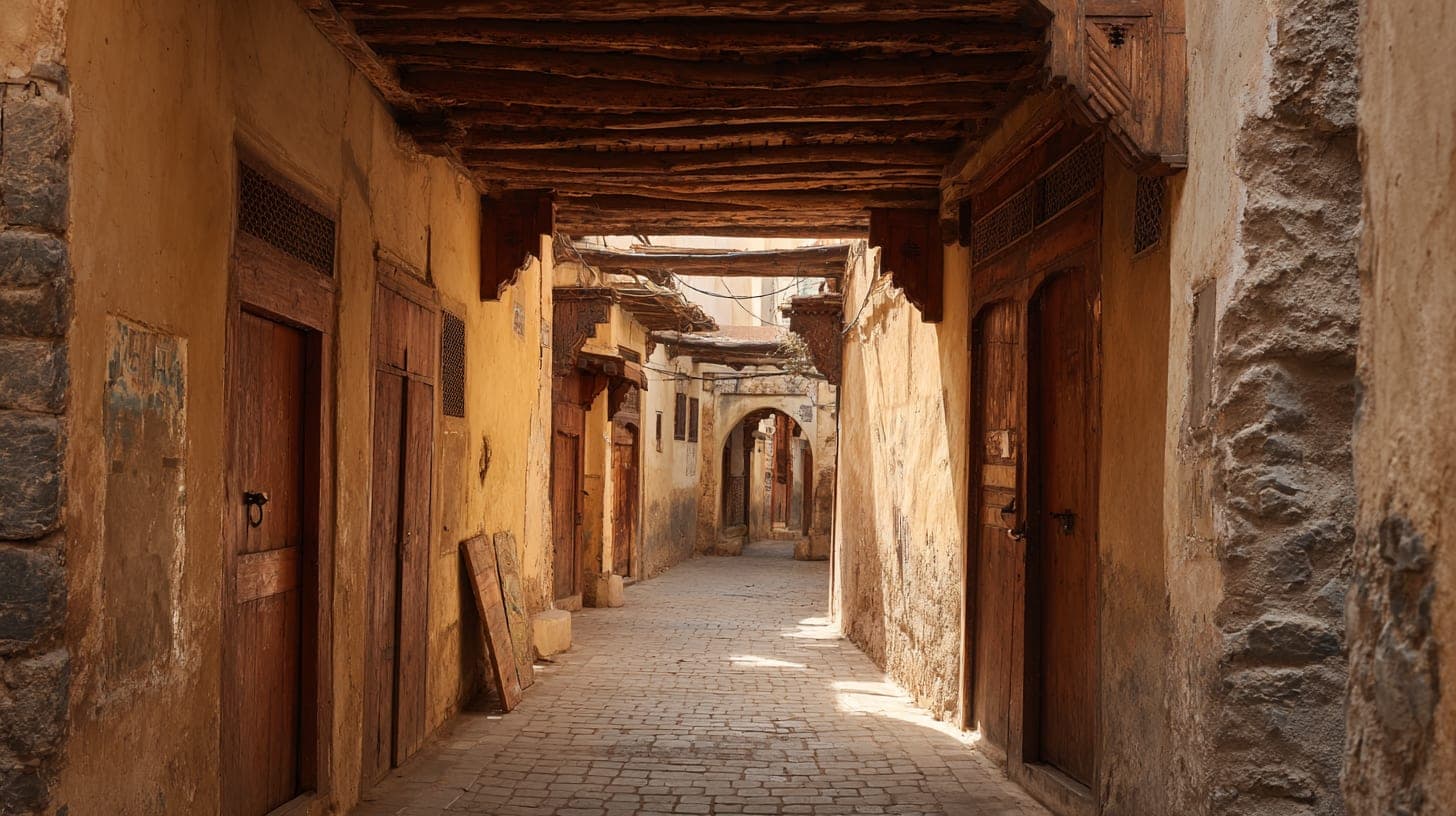
An afternoon in a Fez derb
The older medina, the slower one, where the dyers' quarter still smells of indigo at three o'clock.
Fez is the older city.
This is the first thing to know about Fez, and it explains nearly everything else. Marrakech was founded in 1062 by the Almoravids; Fez was already two and a half centuries old by then, founded in 789 by Idris II as the second capital of the dynasty he inherited from his father. The medina of Fez — Fes el-Bali — is the largest car-free urban area in the world, contains more than 9,000 named lanes, and is the seat of the oldest continuously operating university on the planet, the Qarawiyyin, founded in 859 by Fatima al-Fihri. Fez does not have to perform its history. The history is the city.
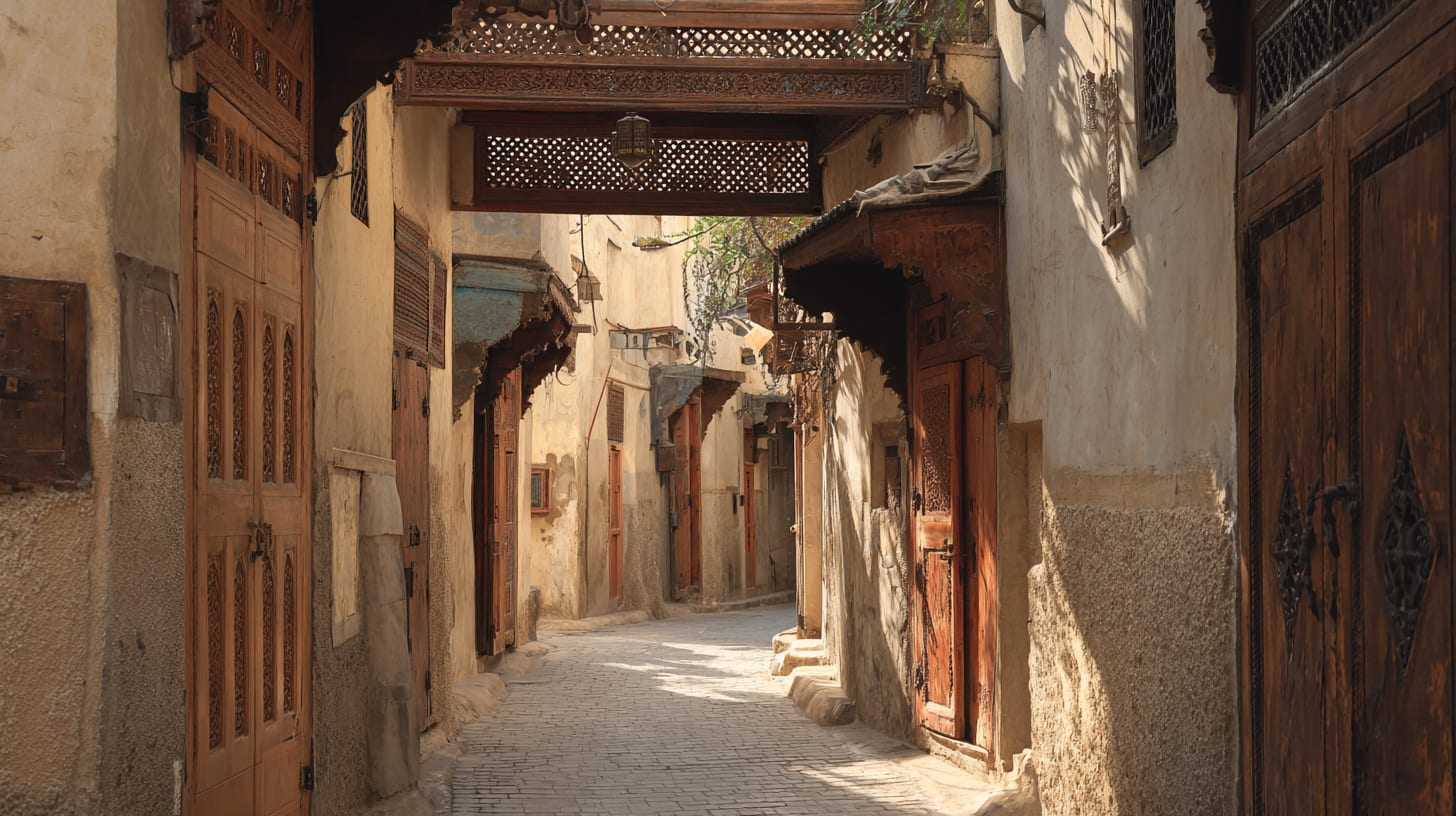
A Marrakech morning is busy and a Marrakech afternoon is somnolent. A Fez afternoon is something else: a slow, shaded movement of bodies through covered lanes that have been roofed in the same way for eight hundred years, with the light filtering through latticework above and the smell of leather, cedar, mint, and dye carrying along the passage. The medina of Fez does not get the slack hour Marrakech does. It runs continuously from morning until evening, but at a different metabolic rate, slower and more deliberate, with the trades clustered in their original quarters and the workshops doing the same things they have done for centuries.
Walk into the Chouara tannery quarter at three in the afternoon. The smell is the first thing — pungent, unmistakable, somewhere between ammonia and animal hide and the particular vegetable acidity of the soaking pits. The tanners work in stone vats sunk into the earth, vats that have been in continuous use for over a thousand years, treating the leather first with a mixture of pigeon droppings and quicklime to break down the animal hair, then with a series of vegetable dyes — saffron for yellow, henna for orange, indigo for blue, poppy for red, mint for green. The colours of the vats from the surrounding terraces are remarkable, and the photographs of them are some of the most-shared images of Morocco. The smell is not in the photographs.
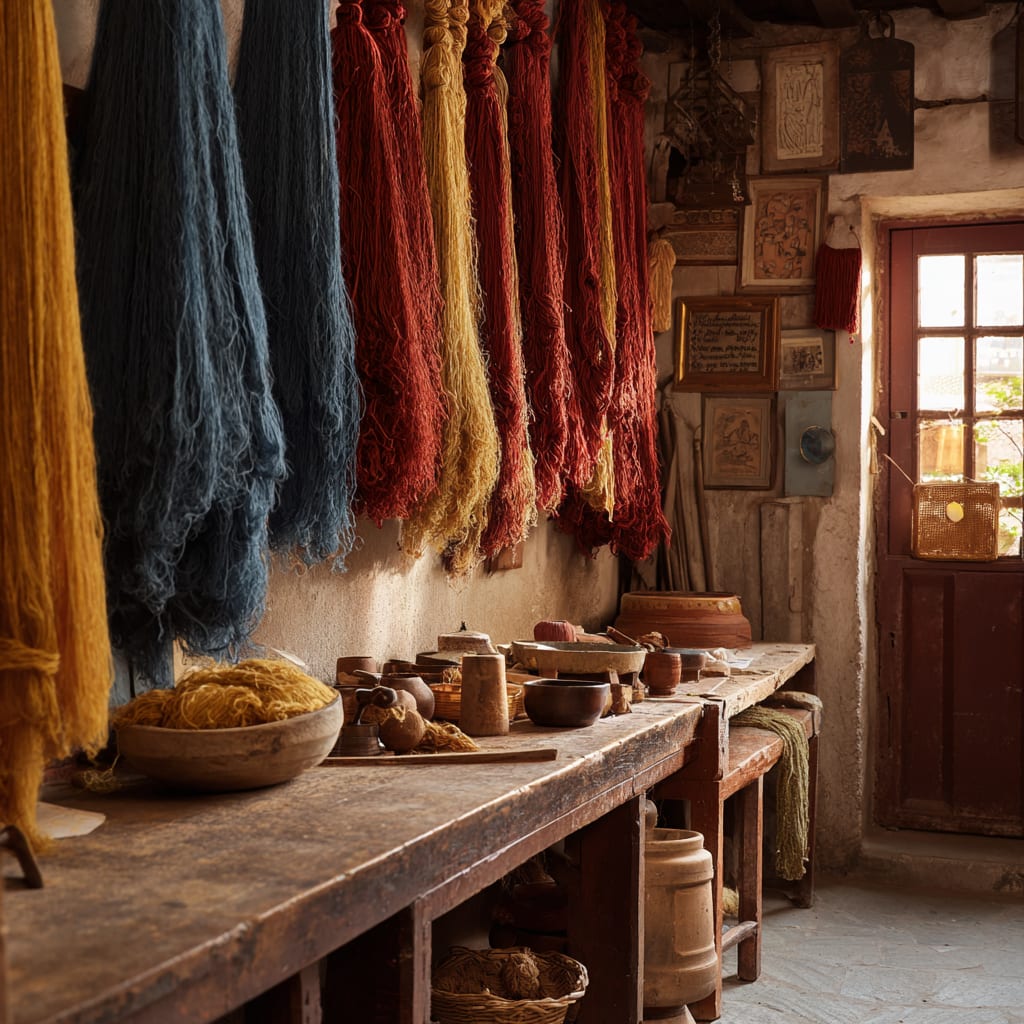
The dyers' quarter, Chouara, sits next to the tanners. It is smaller, less famous, and — to people who pay attention — more interesting. The dyers work indoors, in narrow stone-floored workshops where wool yarn hangs in skeins from wooden poles in graduated colours: deep indigo, mineral red, soft saffron, walnut brown. The skeins are dipped, hung to drip, dipped again, hung again, until the colour is the colour the dyer recognises as right. The recognition is not by chart. It is by eye, by long practice, by the particular feel the wet wool has when the pigment has bound to the fibre.
Indigo is the most demanding of these dyes. The plant — Indigofera tinctoria — does not yield its colour easily. The dye has to be fermented in vats with lime and oxidising agents, kept at the right temperature, monitored over days. The yarn comes out of the vat green and turns blue in the air as it oxidises. A skilled dyer can produce a dozen distinct shades of indigo from the same vat by varying the dipping time and the number of dips. The deepest indigo, the one used for the wool of djellabas worn in the rural Moroccan winter, requires repeated immersions over several days.
The Fez dyers are mostly elderly. Their sons have largely moved into other trades. The dye houses that operated thirty years ago are mostly closed; perhaps a quarter of them remain. The ones still working are kept alive partly by the heritage tourism industry, partly by a small but committed export market for hand-dyed wool, and partly by sheer inertia — they have been doing this for fifty years and do not know how to do anything else.
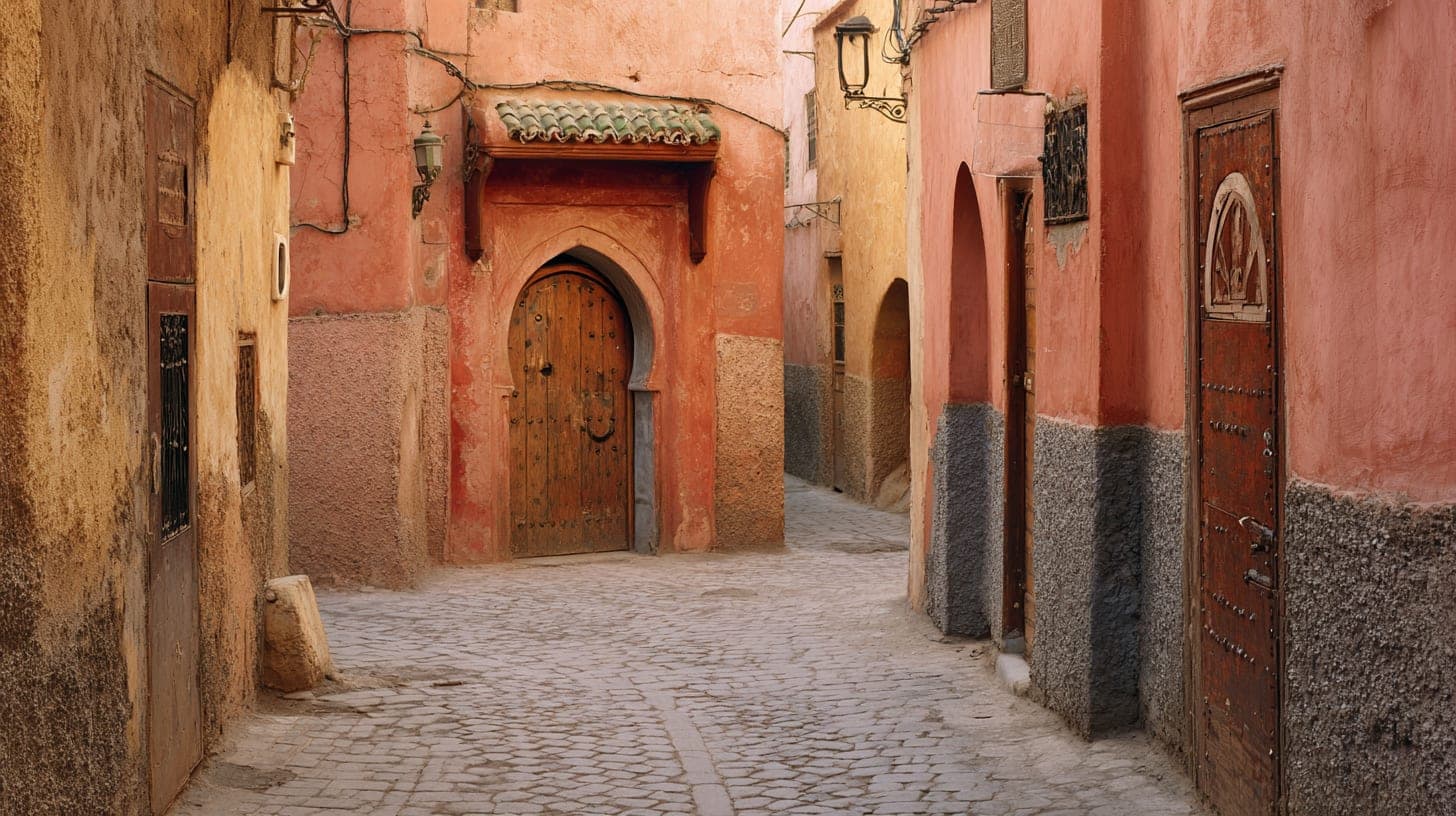
Step out of the dye house and back into the lane. The afternoon has thickened. The sun is higher now, but in Fez the lanes are narrow and roofed enough that the light remains soft and indirect. The Fes el-Bali derbs are lower and older than the Marrakech ones, with stone arches at the entry of each quartier and small landmarks — a fountain, a saint's tomb, a cedar door with iron studs — at every change of direction. You learn the city by these landmarks, because every map you can buy is wrong, and Google Maps in Fez is dramatically wrong, often suggesting routes that have been walled off for two hundred years.
The Talâa Kebira, the main artery of the old city, runs roughly from the Bab Boujloud at the western edge to the Qarawiyyin at the centre, descending the long slope of the medina hill. Walk it slowly in the afternoon. The shops are open but the pace is unhurried. A bookbinder sits cross-legged in a doorway stitching pages by hand. A copper merchant polishes a tray that may have been made by his grandfather. A maker of babouches, the soft leather slippers, sews the soles to the uppers with a curved awl that he has owned for forty years. The lane smells alternately of cedar, of leather, of mint tea coming out of a small café, of incense from a perfumer's shop. Every fifty metres the smell changes.
This is what makes Fez different from Marrakech, and also what makes a Fez afternoon a particular kind of pleasure. The trades are still in their original places. The leather is still in the leather quarter, the dyers in the dyers' quarter, the metalsmiths near the Seffarine Square where they have been hammering copper for nine centuries, the booksellers around the Qarawiyyin. Marrakech mixed its trades together long ago, and tourism mixed them further. Fez has held its layout in a way no other Moroccan city has.
There is a small thing about the Qarawiyyin that surprises foreigners. The mosque-university is at the geographical centre of the medina, but it is almost invisible from the lanes — the buildings around it press up against its walls, leaving only narrow passages and small doorways into the courtyards. Unless you know where you are looking, you can walk past the entrance without seeing it. The whole structure is folded into the city rather than separated from it, the way a European cathedral usually is. This is a deliberate medieval architectural decision. The university and the city are not distinct entities. They are the same fabric.
By five o'clock the call to prayer comes from the Qarawiyyin minaret and a hundred other minarets across the medina, slightly staggered, each one catching the previous one's last syllable. The shops do not all close, but the pace shifts again. The afternoon is closing. Workers begin to head home. The covered lanes empty by degrees. By seven the medina is quieter than it has been since dawn, and a different kind of evening light begins to settle along the stone walls of the lower quarters.
Fez does not seduce the way Marrakech does. It does not perform. It is older, slower, less interested in being seen, and harder to know — and for the people who fall for it, this is most of the appeal. A foreigner who has spent three afternoons walking the Fes el-Bali lanes properly does not return to Morocco the same way they came. They return knowing that the country contains at least two distinct old cities, that one is louder and one is older, and that the older one has not entirely decided whether to keep being a working city or to become a museum. As long as the dyers and the bookbinders and the leather workers and the copper hammerers continue to do what they have always done, the question stays open.