Cedar
Cedar
The timber that built the medina, and the forests that paid for it.
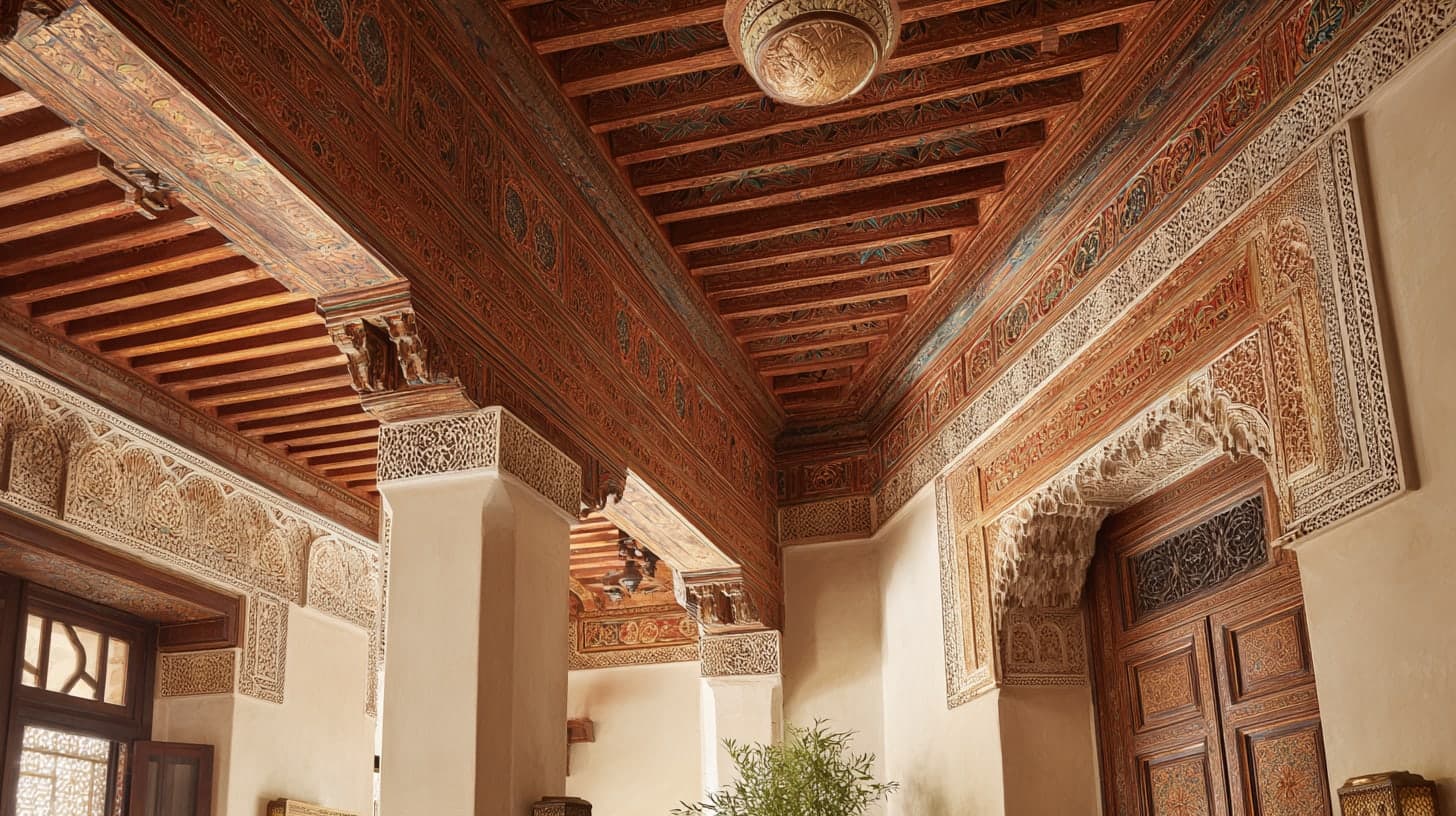
The ceilings of the medina are mostly cedar.
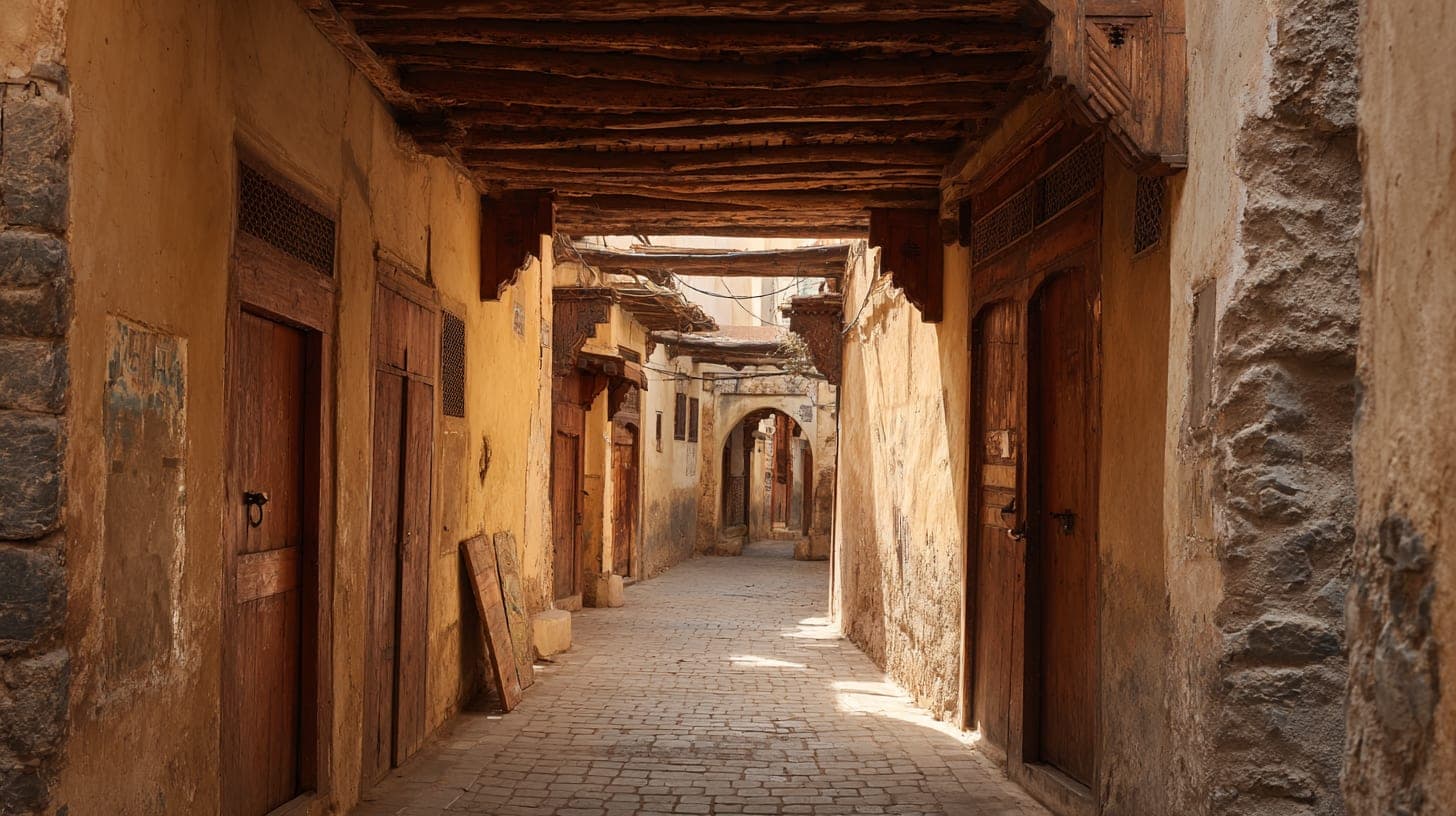
Walk through any properly preserved riad in Marrakech, Fez, Meknes, or Tetouan and look up. The beams above your head, the painted zouak panels, the carved moucharabieh screens, the doors, the lintels, the shutters: nearly all of it is Cedrus atlantica, the Atlas cedar, cut from the high forests above 1,500 metres in the Middle Atlas and transported down to the cities by mule and cart for over a thousand years.
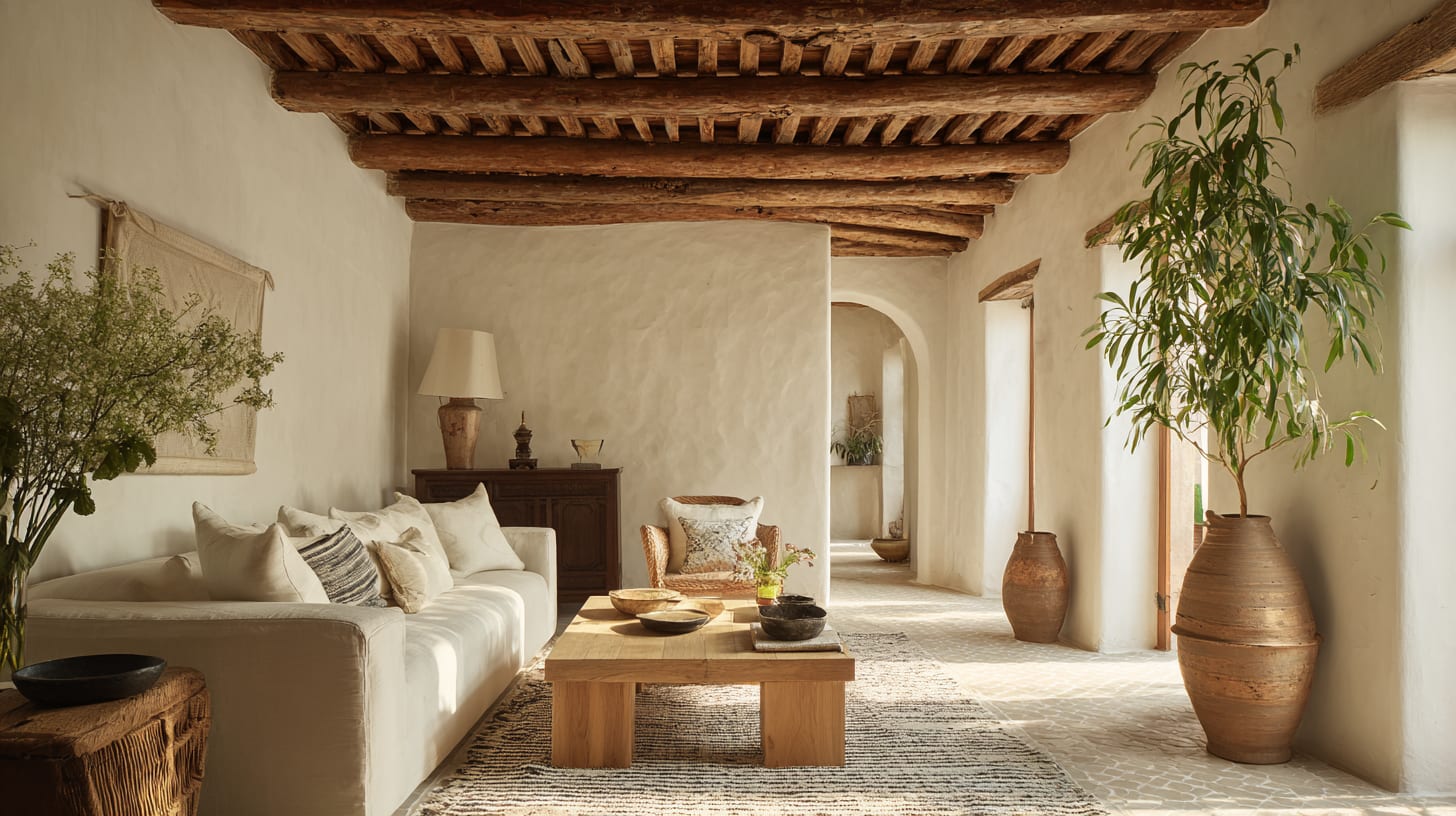
Cedar built the medina because almost nothing else in Morocco was suitable. The local wood available at lower altitudes was either too soft, too prone to insects, or too short in span to bridge the proportions Moroccan architecture requires. Cedar is dense, oily, naturally insect-resistant, and grows tall and straight enough to produce beams of seven, eight, ten metres in a single piece. It also smells, faintly and permanently, of cedar — which is why old riads carry that particular dry, pencil-shaving scent in the rooms that have not been modernised. The smell is the wood itself, slowly releasing oil into the air for centuries after it was cut.
The forests that supplied this wood are concentrated in two regions. The Middle Atlas around Azrou, Ifrane, and the cedar plateau near Aïn Leuh held the largest commercial stands. The Rif mountains around Chefchaouen and the Talassemtane massif held the second. Both ranges were cut steadily through the medieval and early modern periods to supply Marrakech, Fez, and the inland cities. By the time the French arrived in 1912, the Middle Atlas forests were already noticeably depleted. The protectorate administration introduced commercial forestry management partly because the cedar resource was running low, not out of sentimentality.
The forests have continued to shrink. Estimates from Morocco's Haut Commissariat aux Eaux et Forêts put the cedar forest area at roughly 130,000 hectares in 2026, down from an estimated 250,000 hectares a century ago. Climate change is doing most of the recent damage — the cedar requires cool, humid conditions that the Atlas is losing as the climate warms — but commercial logging, charcoal production, and grazing pressure from sheep and goat herds also contribute. Cedar that took a hundred and fifty years to mature can be cut in an hour. Replacement stands grow slowly enough that a tree planted now will not be commercially harvestable until 2150 or later.
For a house, this matters in a specific way. New cedar is no longer cheap, and it is no longer infinite. A renovation that calls for replacement beams or new ceiling panels in the traditional dimensions has to find the wood somewhere, and the wood available today is younger, less dense, and more expensive per cubic metre than the cedar used in older houses. A maalem looking at an original eighteenth-century beam knows immediately that he could not source the equivalent now at any reasonable price. The trees that produced beams of that calibre were already two centuries old when they were cut.
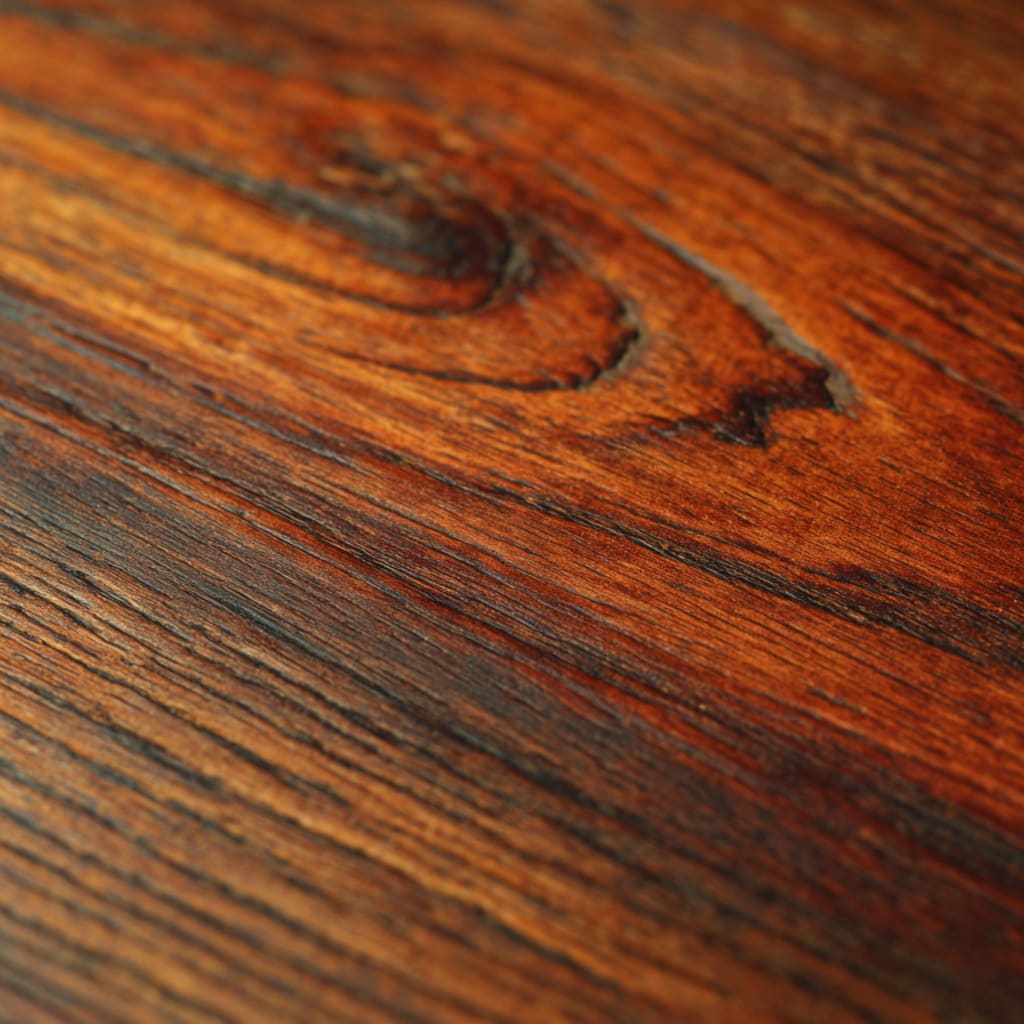
This is also why salvaged cedar matters more in Morocco than in most countries. When an old riad is demolished or stripped, the cedar that comes out of it — beams, doors, panels, lintels — is more valuable than equivalent new wood by a substantial margin. The salvaged cedar is older, denser, drier, more dimensionally stable, and visually richer than anything currently available from a working forest. There is a small parallel economy in Marrakech that traffics in this material: yards in the Mellah and outside the medina walls where salvaged cedar accumulates, gets sorted, and eventually finds its way back into restoration projects. A buyer renovating a serious riad, with a maalem who knows what he is doing, will source as much of the new ceiling work from these yards as possible. The visual difference is immediate. A ceiling done with salvaged eighteenth-century cedar reads correctly. A ceiling done with new commercial cedar reads as restoration, however carefully it is fitted.
There is also the question of what the carving sits on. The painted ceiling panels — zouak, with their geometric patterns and floral medallions — are themselves works of considerable craft, but they sit on cedar. The painters work directly onto the wood. If the wood is wrong, the painting that sits on it ages wrong. Old cedar accepts the pigment and binds with it over decades; new cedar can produce surface adhesion problems and minor warping that telegraphs through the painted layer. A maalem painting a new ceiling will sometimes refuse to start until he has seen the wood, because he knows what will happen if the panel is industrial cedar from a younger tree.
The forests themselves are a question Morocco has not fully answered. Replanting programmes exist; they are slow, underfunded, and competing with grazing rights and water rights and a warming climate. The cedar forests of the Atlas in 2050 will be smaller and patchier than they are now. The houses built before 2000 with proper original cedar are, in this sense, holding a finite resource that will not be replicated. The next century of medina restoration will increasingly rely on salvage, on imported cedar from Lebanon or the Caucasus, or on substitute species that approximate the look without quite reproducing it.
For anyone evaluating a riad, the ceilings are one of the things to look at first and longest. Original cedar in good condition is one of the most valuable elements of an older house, and the most expensive to recreate if it has been removed. A house where the original ceilings are intact is a house that has survived two or three rounds of fashionable renovation without losing its core material. A house where the ceilings have been replaced with something newer — and this happens often, often badly — has lost something it cannot get back.
The mountains the wood came from cared for these houses for a thousand years. The houses, in their way, hold a record of the mountains. When the cedar in a ceiling is fifteenth-century, the room beneath it is older than every modern country in Europe. This does not always show in photographs. It shows when you walk in.