Essaouira at the wind-hour
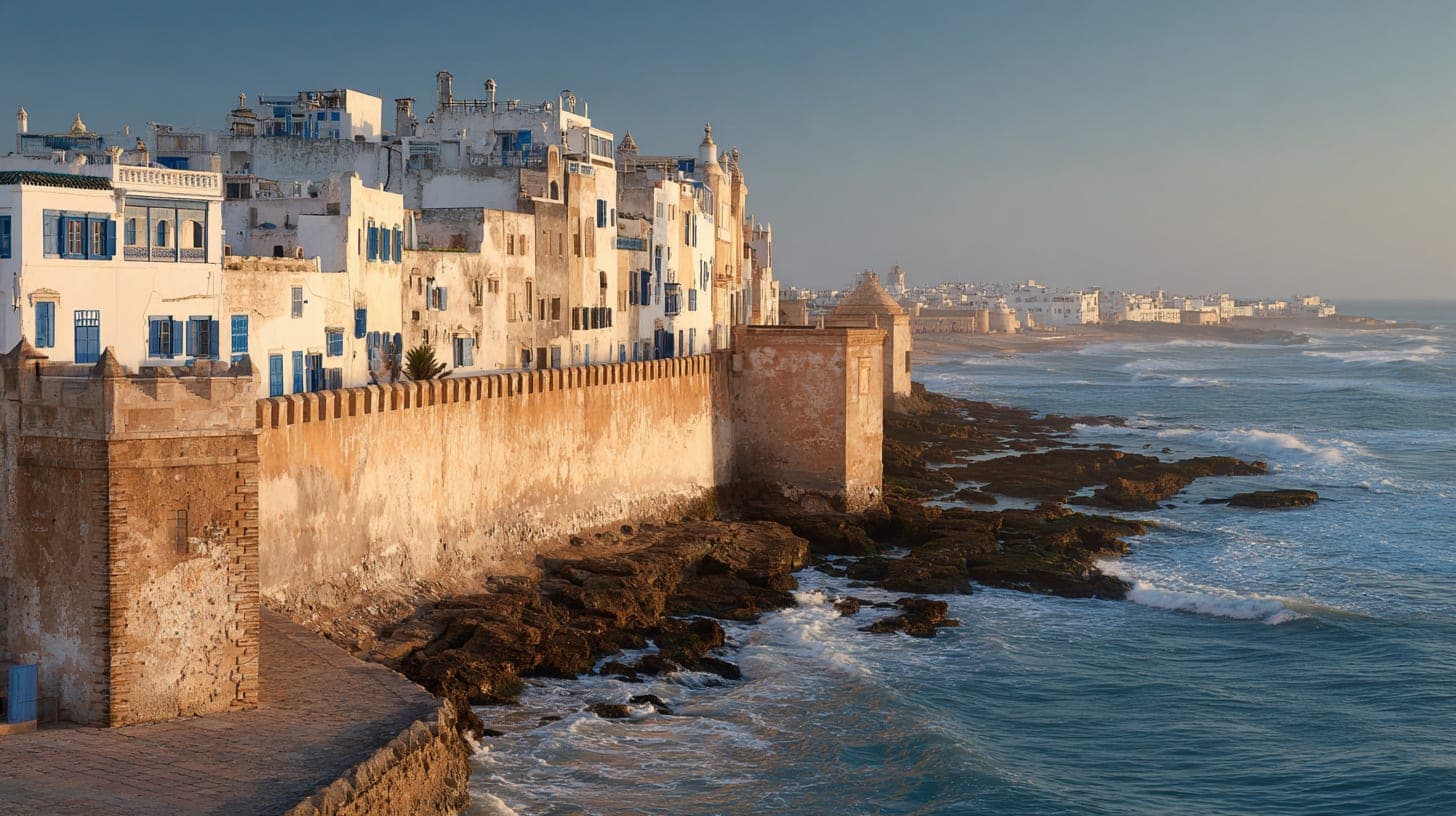
Essaouira at the wind-hour
The Atlantic medina, where the wind comes up at four and decides what the afternoon will be.
The wind in Essaouira comes from the north-northwest and is called the alizé.
It blows nearly every day from spring through autumn, gathering through the morning and reaching its strongest hours in the afternoon, between four and six. Sailors know it as one of the steadiest trade winds on the Atlantic coast of Morocco, and surfers and kitesurfers come to Essaouira specifically because of it. For everyone else who lives in the city, the wind is the central fact of the afternoon. You plan your day around it. You learn what time to walk on the ramparts, what time to eat lunch on a terrace, what time to be inside.
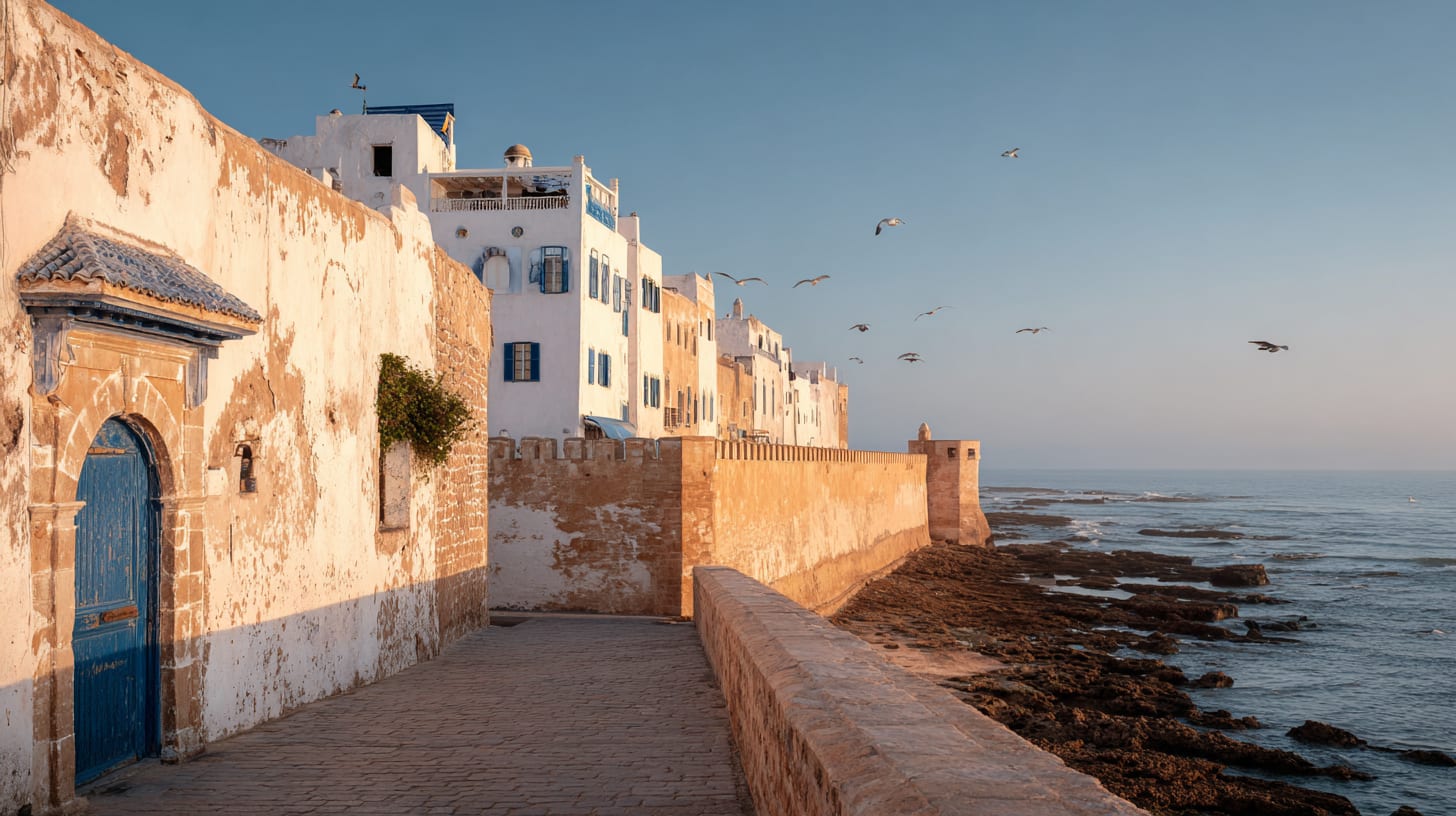
The medina of Essaouira is not like the medina of Fez or Marrakech. It is younger, smaller, more rectilinear, and visibly Atlantic. The old name of the city is Mogador, and the present medina was largely planned and rebuilt in the 1760s by the Sultan Sidi Mohammed ben Abdallah, who hired a French military engineer named Théodore Cornut, formerly of the Vauban school, to lay out a fortified port on the European model. The result is an unusually orderly Moroccan medina — straight streets where most medinas have winding ones, regular blocks where most medinas have organic clusters, open squares where most medinas have only pinch-points. The walls are white-washed limestone with blue trim, the colours kept because of the strong sun and the salt in the air. Walking through Essaouira's medina, especially after Marrakech, you can feel that the city is younger and the planning is foreign.
The fishing port lies just outside the medina walls, at the southwestern corner where the old fortifications meet the harbour. It has been a working port for at least eight hundred years, used in turn by Phoenicians, Romans, Portuguese, the Saadians, the Alaouites, and the present-day Moroccan fishing fleet. Boats land sardines, sea bream, octopus, and anchovies. The auction at the dockside happens early — five or six in the morning, before most visitors are awake — and what the boats catch and the buyers buy that morning becomes the lunch and dinner of the city.
By eleven in the morning the medina is awake and the fish from the auction is already being grilled in small stalls in the Chbanate alley, the lane just inside the fortifications where dockside stalls sell whatever the morning produced. You point at a fish; the stall owner weighs it; he grills it on a charcoal brazier and brings it to you on a metal plate with a slice of lemon, salt, and bread. The whole transaction takes ten minutes and costs less than what would buy you a coffee in central London. The fish is what it is — fresh, simple, salt-grilled, faintly smoky from the charcoal. You sit on a low plastic stool and eat it with your fingers while the wind starts to come up.
Around noon the wind has reached medium strength and the working day in the medina pivots. The artisans of Essaouira — the cabinetmakers working with thuya wood, the silversmiths in the small streets behind the Hassan II clocktower, the painters who have set up small galleries near the harbour — keep working through the afternoon, but the squares and the seafront begin to be dominated by the wind. The blown-sand grit gets into your hair, your collar, the corners of your eyes. The flags on the ramparts snap loud enough to startle the gulls. Awnings on the cafés along Rue Mohammed Diouri begin to flap; the restaurants along the seafront close their outdoor sections.
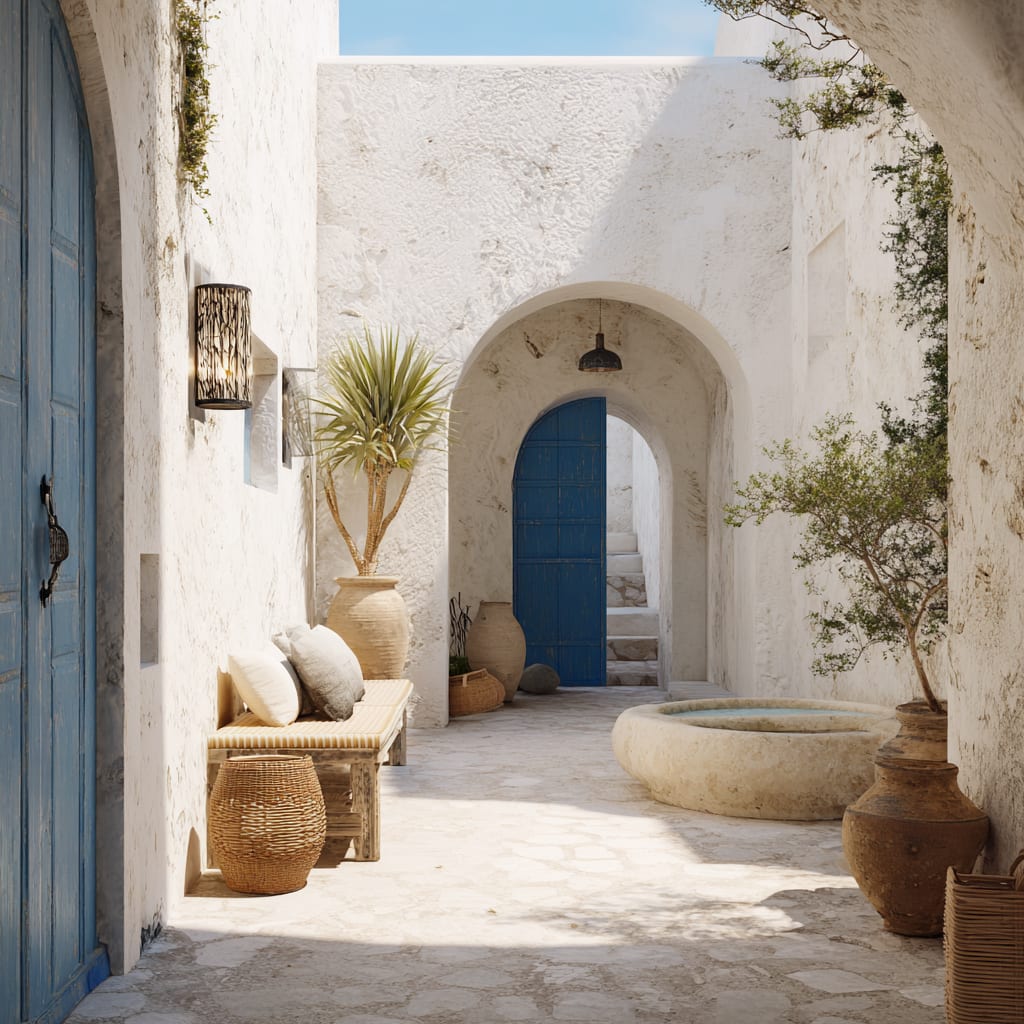
By three the medina is operating in two registers. Inside, in the covered souks and the shaded inner courtyards of the small riads, the afternoon is calm and slow — the wind cannot reach the interior spaces, and the medina returns to its working pace. Outside, on the ramparts and along the harbour and in the open Place Moulay Hassan, the wind has taken over. People walk leaning forward. Loose objects roll across the open ground. The kitesurfers begin to launch from the long beach south of the harbour, and from the ramparts you can see them as small bright triangles on the grey-blue water.
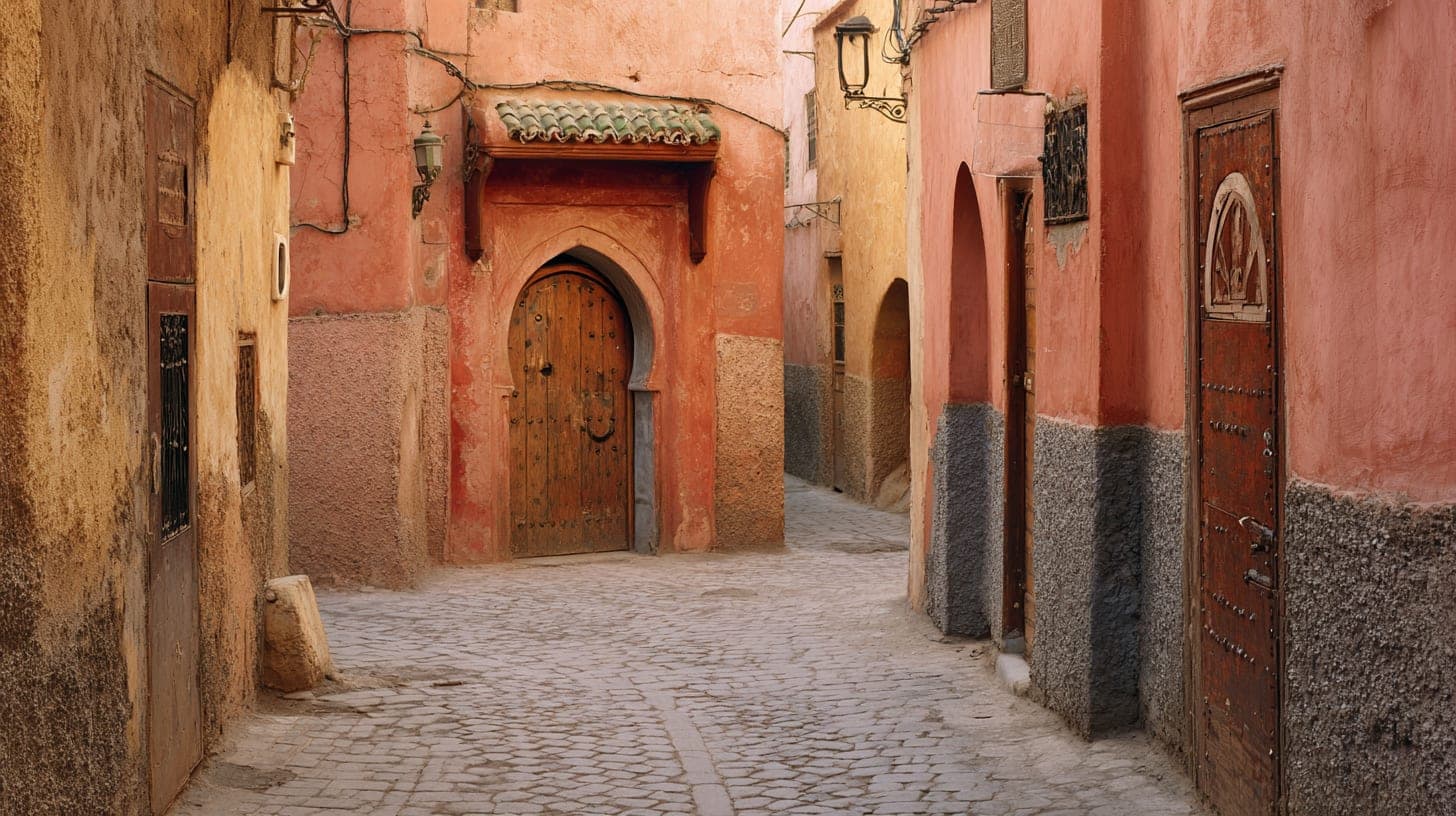
This split between interior and exterior is one of the things that makes Essaouira distinctive. In Marrakech the medina is a single environment; the lanes, the squares, the courtyards all share the same continuous warmth and dust. In Essaouira the wind sorts the city into two layers, and learning to live in the city means learning which layer is right for which hour. Mornings on the ramparts. Afternoons in the courtyards. Late afternoons inside, with a book or a small workshop or a kitchen. Evenings, when the wind drops, back outside.
There is a fourth thing about Essaouira that is harder to describe but is part of why people come back. The light is different. The Atlantic light is colder than the Marrakech light, with more grey and blue in it, and the white lime-washed walls reflect it differently than the warm pink-ochre walls of Marrakech reflect their own light. An Essaouira afternoon has a particular quality of brightness — flat, high, salt-heavy, slightly cool — that does not exist inland. Painters have come here for this for two centuries. The light is part of why Orson Welles filmed parts of Othello here in 1949, why Jimi Hendrix lived in the small village of Diabat for a few weeks in 1969, why successive generations of European and American expatriates have kept finding their way to the small Atlantic town and staying for longer than they meant to.
The wind drops, usually, between six and seven. The medina exhales. The squares fill again. The cafés reopen their outdoor seating. The fishermen who have been ashore through the afternoon begin to talk about the tide and the next morning's work. By eight, on a good night, the central square Place Moulay Hassan has filled with a slow, sociable crowd — locals, expatriates, a few visitors who have figured out the rhythm of the day and stayed past the hour when the cruise-ship buses left. The light goes blue, then grey, then dark. The Atlantic is invisible beyond the ramparts, but you can hear it.
For people who buy property in Essaouira, the wind decides almost everything about the orientation of the house. North-facing rooms catch the alizé directly and become unusable in the afternoon; south-facing rooms are protected by the body of the building and become the ones where you live. Houses with terraces facing the prevailing wind have lower asking prices than houses with terraces facing south. Buyers who are not local often miss this on the first visit and only notice on the second, when they realise that the rooftop terrace they had pictured drinking coffee on is the same terrace where they cannot keep a book open in the afternoon.
There is a saying among Essaouira locals that the wind is what keeps the city from filling up. Marrakech, they say, has the climate Europeans love and so Marrakech became expensive. Essaouira has the wind, which most Europeans find difficult, and so Essaouira stayed manageable. Whether this is still true in 2026 is debatable — property prices in the medina have risen significantly in the last decade, and the village of Diabat across the river is now full of foreign-owned villas. But the wind, at least, has not changed. It still comes up at four. It still blows hard. It still decides what the afternoon will be.