Pisé
Pisé
The earth that built the south, and what gets lost when nobody knows how to rebuild it.
The kasbahs of southern Morocco are made of dirt.
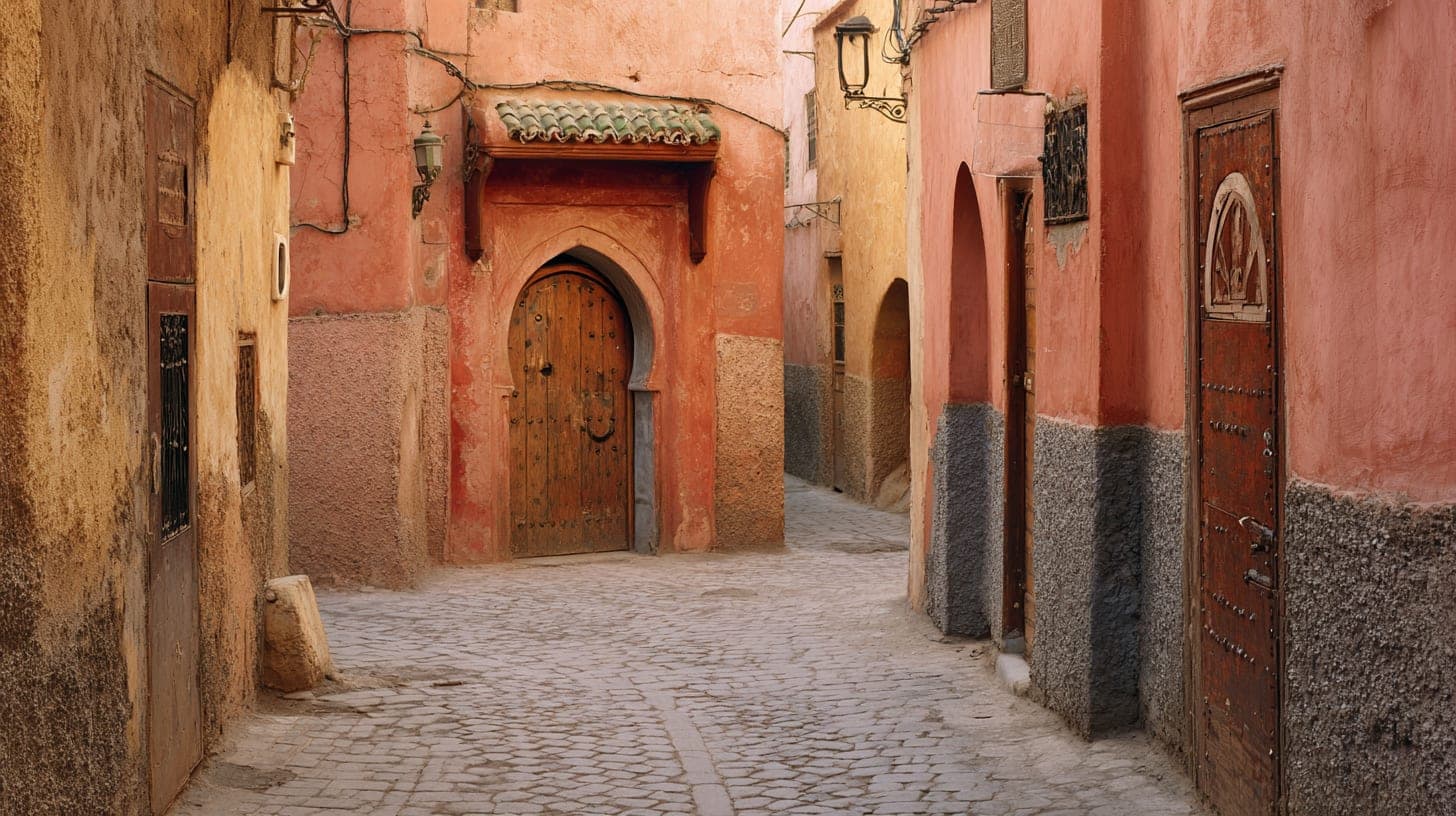
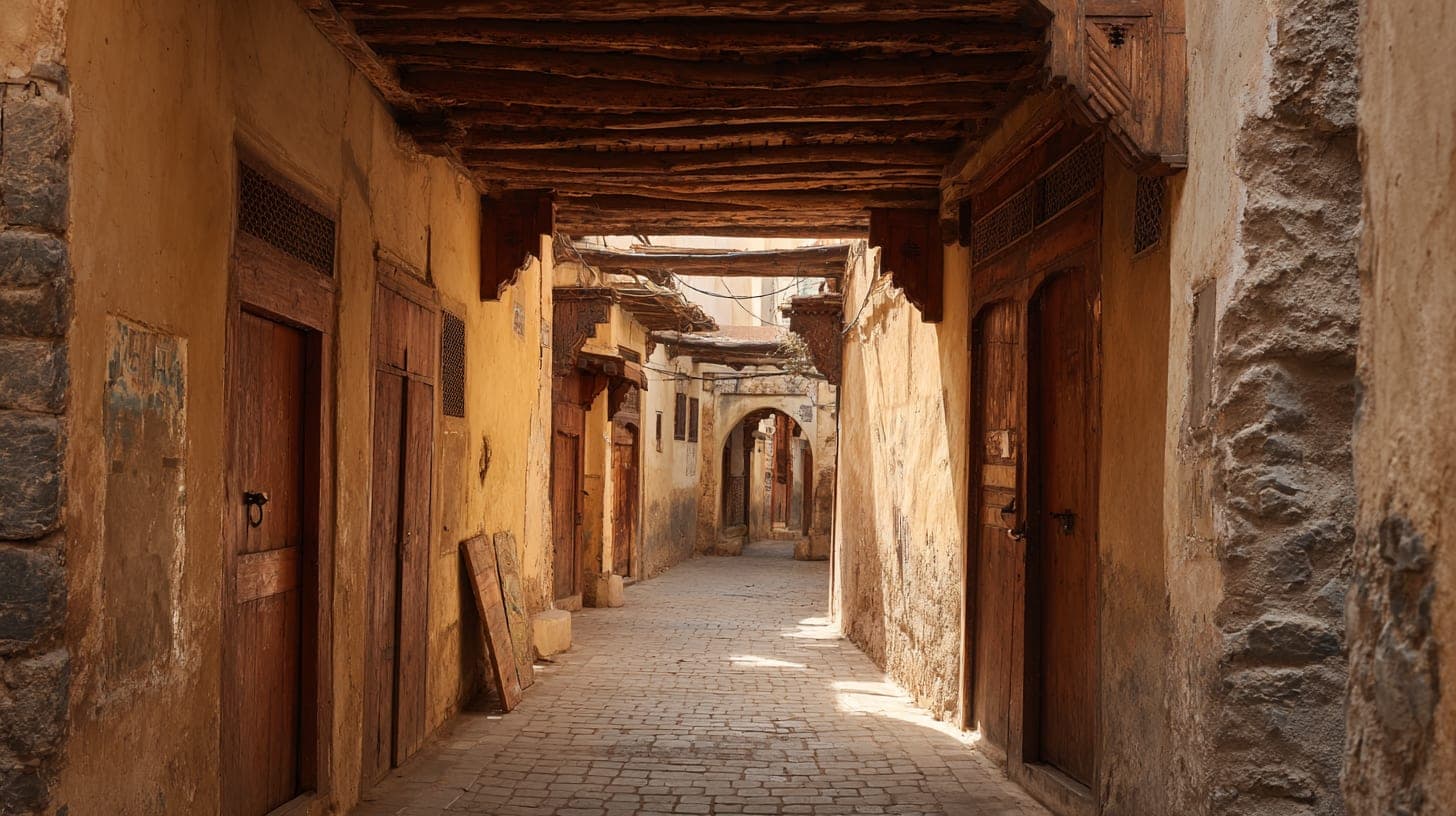
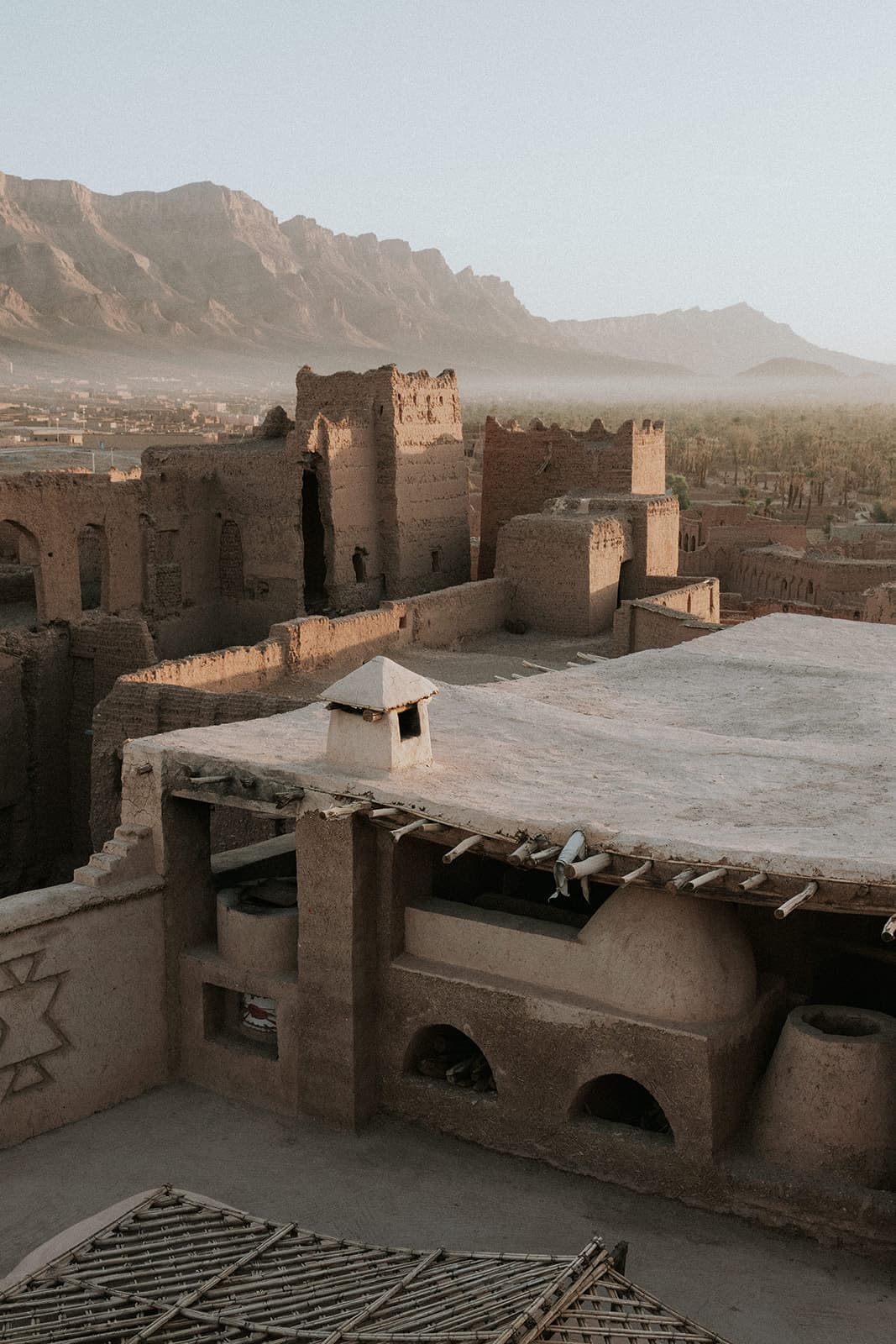
Not stone, not brick, not concrete. Compacted earth, mixed with a small amount of straw and lime, packed wet between wooden forms in horizontal lifts of thirty or forty centimetres at a time, and left to dry in the sun. The technique is called pisé in French, tabia in Arabic, rammed earth in English. The same method built the Roman walls of Cartagena, the boundary walls of medieval Lyon, and large sections of the Great Wall of China. In Morocco it built nearly every kasbah, ksar, and rural fortified house from the Atlas foothills south to the Sahara, and most of the agricultural villages between them.
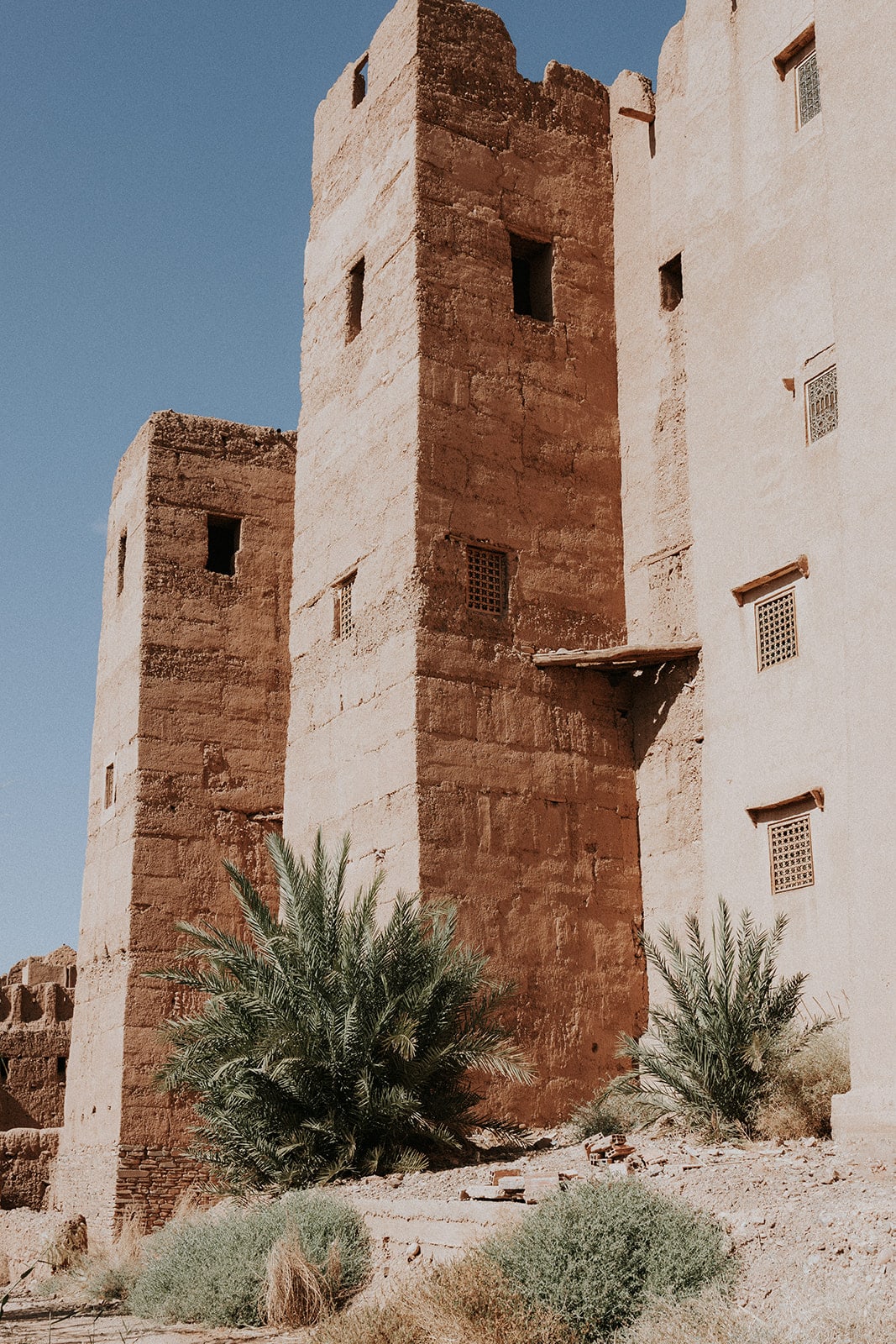
A pisé wall, properly made, lasts for centuries. The pigeon towers and granary fortifications of the Drâa and Dadès valleys include structures from the seventeenth and eighteenth centuries that are still inhabited, still load-bearing, still thermally efficient. The walls are typically a metre thick at the base and seventy or eighty centimetres at the top. They moderate temperature so effectively that interior rooms in a Skoura or Tinghir kasbah remain twelve or fifteen degrees cooler than outside in midsummer, and significantly warmer at night in winter. Modern thermal engineering rediscovered most of this in the 1970s. The kasbah builders had been doing it for eight hundred years.
The materials cost almost nothing. The earth is the earth the kasbah is sitting on; the straw is whatever the local agriculture produces; the lime is fired in small kilns nearby. The cost is labour, and labour was historically cheap. A medium-sized kasbah for an extended family could be built in a single dry season by twenty or thirty men working under a maalem who had inherited the technique from his father. The construction logic was tribal and seasonal: the kasbah went up between harvest and the next planting, when the men were available and the earth was workable.
What pisé does not survive is rain.
Or rather, it survives ordinary rain very well, because the lime in the mix helps the wall shed water and the wide eaves of a properly built kasbah keep the rain off the elevations. What pisé cannot survive is sustained rain — the kind that comes when the climate shifts, or when a roof fails and water enters the wall from above, or when a flood event saturates the base of a wall and the structure begins to slump. A pisé wall losing its integrity does so slowly at first and then all at once. The first signs are vertical cracks, slight bulging, a chalky residue at the base. Then a winter comes with more rain than the wall has seen in a century, and the corner softens, and the corner falls, and the rest of the wall follows within a few years.
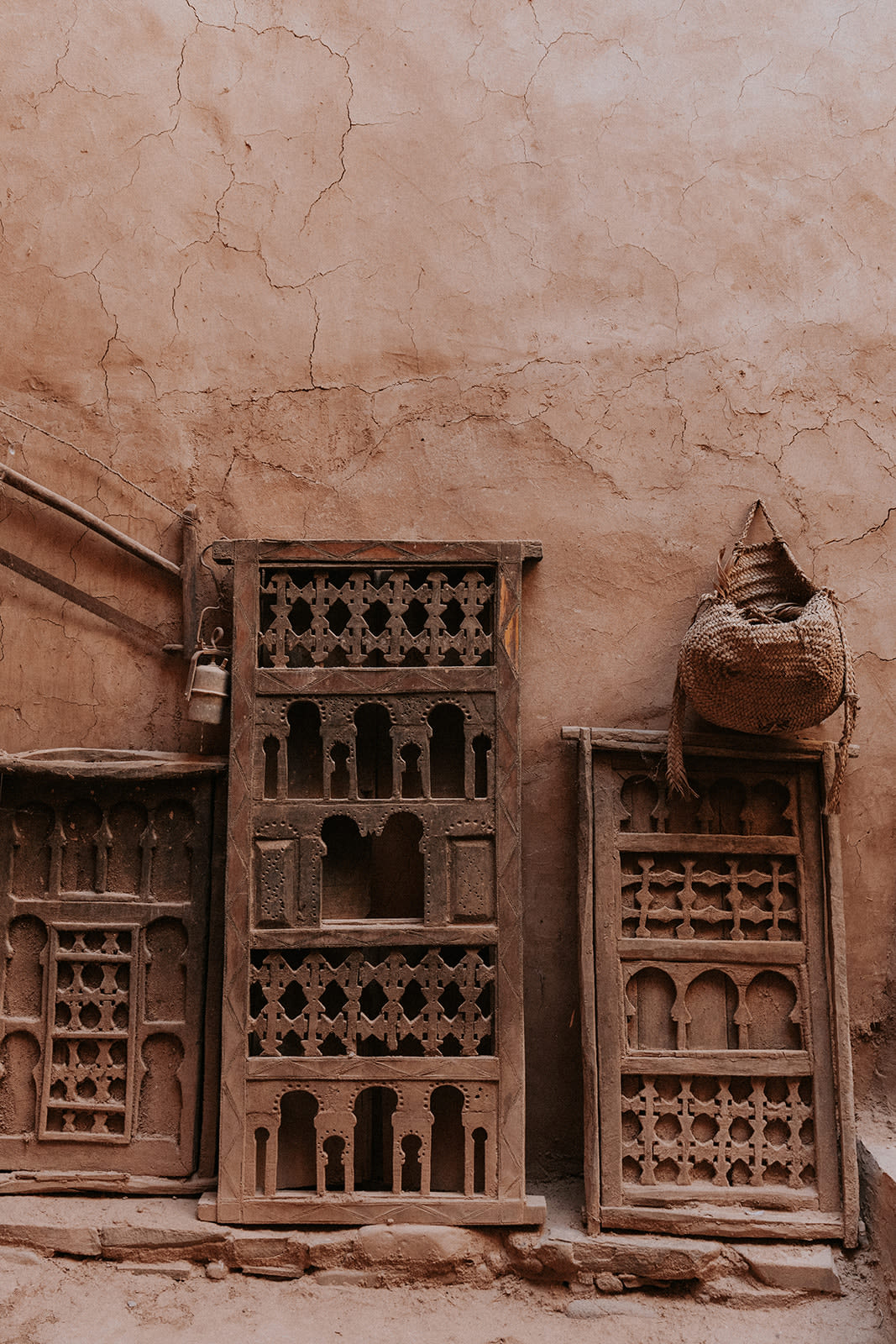
The kasbahs of the south are losing this battle in slow motion. The Aït Ben Haddou caravan stop, now a UNESCO site, has lost perhaps half its built fabric in the last fifty years to a combination of abandonment, rainfall events, and the lack of maalems trained to repair pisé properly. Telouet, the Glaoui stronghold above Marrakech, is in worse condition — most of the upper rooms are open to the sky, the painted ceilings collapsing into rooms of dust, and the few remaining intact zouak panels and zellige medallions visible through holes in the walls. The kasbahs of the Drâa Valley between Ouarzazate and Zagora include several where the inhabited ground floor is in reasonable condition while the upper floors have already partially collapsed.
The cause is partly climate, partly economics, and partly the loss of craft. Climate, because the rainfall patterns have become more violent — more concentrated in shorter periods, with longer dry spells in between, which is the worst possible pattern for earthen walls. Economics, because rural southern populations have moved to the coastal cities, and a kasbah that nobody lives in is a kasbah that nobody maintains. Craft, because the maalems who knew how to repair pisé are mostly elderly, mostly not training successors, and mostly not being hired even when their skills could save a structure.
A few are still working. A handful of pisé restoration specialists operate out of Ouarzazate, Tinghir, and the smaller towns of the south. Some are connected to the heritage agencies; some operate independently for foreign buyers who have purchased a kasbah and want to restore it properly. The work is slow and expensive — not because the materials cost much, but because the labour is now scarce and skilled. A maalem who can repair pisé authentically commands rates that would have been unthinkable in 1970, and even at those rates, the supply does not meet demand.
For a foreign buyer interested in southern Moroccan property, this is one of the central facts to understand before signing anything. A kasbah is not a riad. It is a different kind of object, with different maintenance demands, a different repair vocabulary, and a different timeline of decay. Buying a kasbah without budgeting for ongoing pisé maintenance is buying a building that will partially collapse during the buyer's ownership. Buying a kasbah with the right maalem on retainer and a multi-year restoration plan is participating in the survival of a building that has already lasted two or three centuries and could, with care, last another two or three.
There is also a question of what a kasbah is for. The traditional answer was: a fortified family compound for an extended kin group, with defensive walls because the southern valleys were unstable, with grain storage on the upper floors, with animal stalls on the ground floor, with sleeping rooms ranged around small interior courtyards. None of this is what a foreign buyer wants. Most foreign buyers convert kasbahs into either second homes or small guesthouses, which means cutting larger windows, opening up interior rooms, installing kitchens and bathrooms that did not previously exist, running water and drainage and electricity through walls that were designed for none of these.
This adaptation is not impossible, but it has to be done carefully. Cutting a window into a pisé wall removes some of the structural mass that was holding the wall in compression. Drilling for plumbing creates moisture pathways that did not previously exist. Adding a modern roof in concrete, instead of replacing the original earth-and-cane roof in kind, changes the way water moves through the structure. Each of these decisions, made wrong, accelerates the failure of the building.
The kasbahs that have survived best, in private ownership, are the ones where the foreign buyer recognised early that they were buying into a living craft tradition rather than just a piece of architecture. They found a maalem. They listened to him. They restored the building at the pace the materials required, not at the pace their schedule preferred. They kept some rooms in their original configuration even when modernising others. They accepted that pisé requires periodic re-rendering, and budgeted for it.
The ones that have done worst are the ones where the buyer treated the kasbah as a renovation project to be finished and then forgotten. Those buildings tend to be back on the market within five years, with prices that reflect the urgent need to find someone willing to take on what the original buyer underestimated.
For the south, this is the larger question. The kasbahs of Telouet, Aït Ben Haddou, the Drâa, the Dadès, the Saghro foothills are part of a built fabric that took centuries to make and could disappear within a generation if the climate continues to shift and the craft continues to thin. What survives will be what is owned by people who understood what they were buying and were prepared to maintain it. The rest will return to the earth it came from, more quickly than seems possible.