Tadelakt
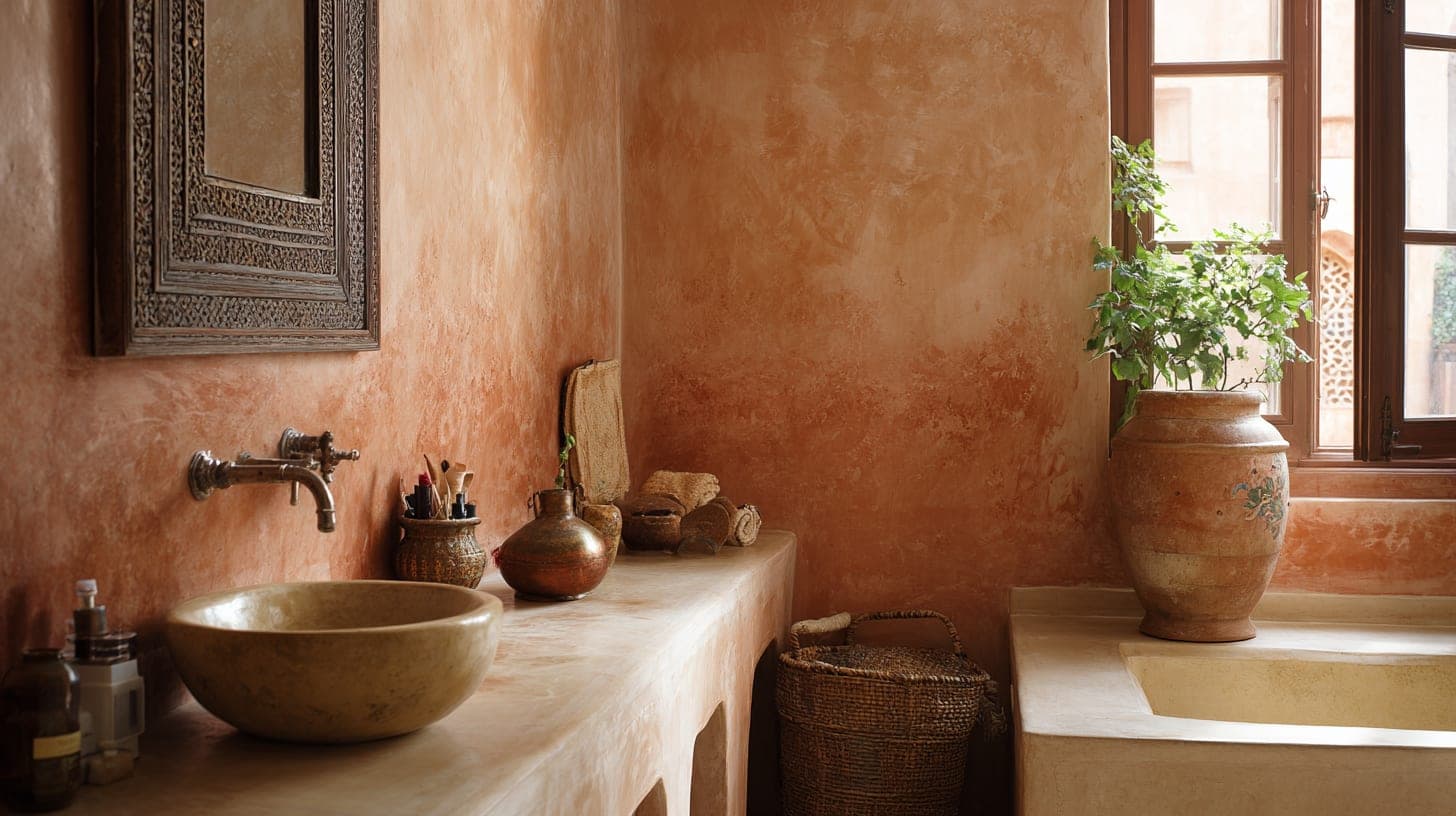
Tadelakt
The plaster that came out of the hammams.
For centuries, tadelakt was not a finish for living rooms. It was the lining of the cistern.
The technique appears around the medieval expansion of Marrakech, used for palace water reservoirs and hammam interiors. Anywhere a wall had to hold water for years without leaking. The Saadian ruins of the El Badi palace contain tadelakt cisterns from the late sixteenth century, still recognisable. Medieval builders lined the medina hammams with it because nothing else they had could survive the steam.
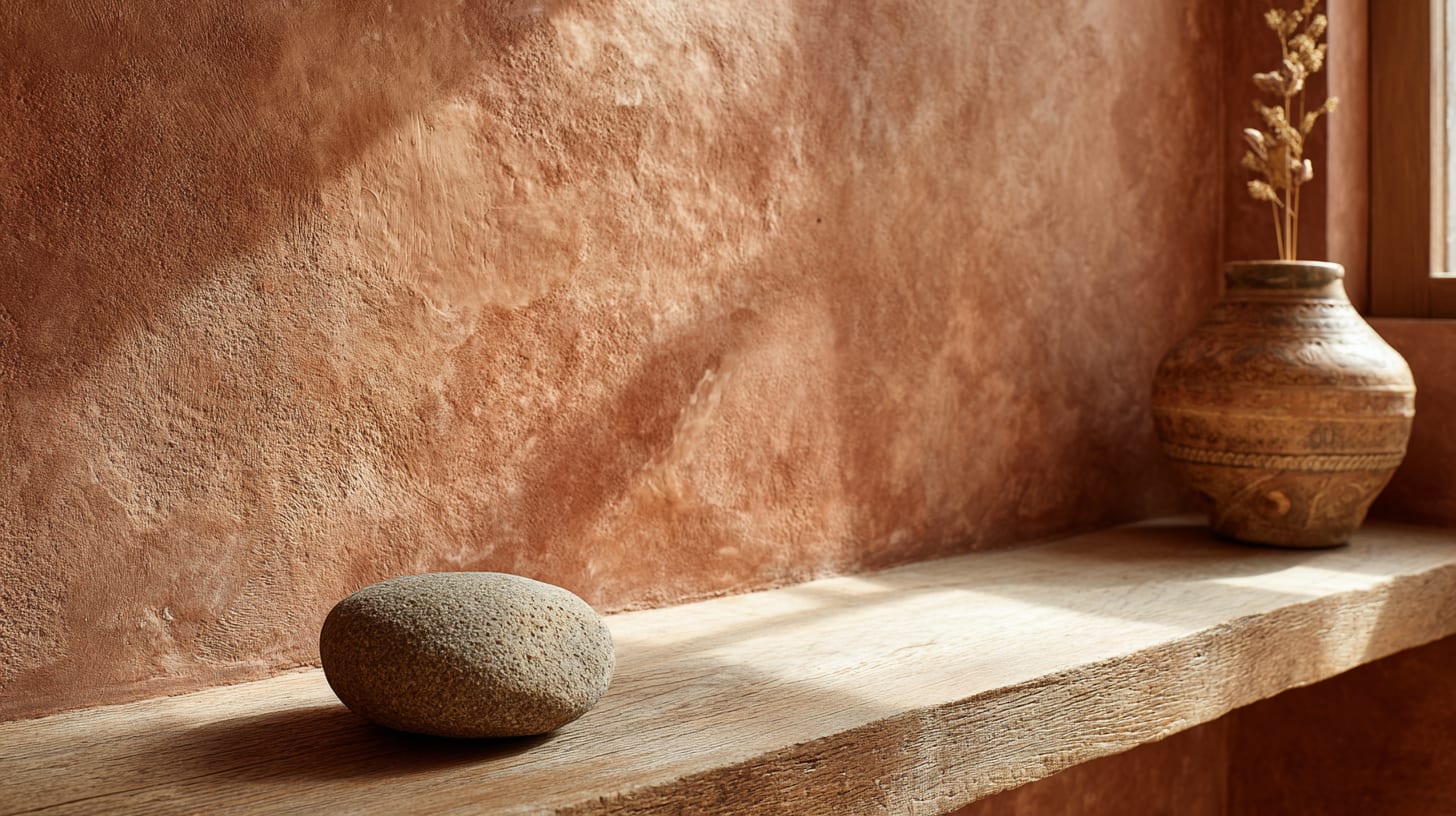
Two ingredients do the work. The first is lime, slaked from limestone in kilns near Salé, Tétouan, or Meknes. The lime must mature for months before use; the older the slake, the better the bind. The second is savon noir, the black olive-paste soap of Morocco, the same substance women carry into the hammam in small jars. Rubbing the soap into fresh lime triggers a chemical reaction: the calcium in the lime combines with the fatty acids in the soap to form an insoluble calcium-soap layer. The wall becomes waterproof. This is not a sealant. The surface itself changes. A finished tadelakt wall has a faint sheen rather than a polish; in low light it seems to absorb light rather than reflect it.
The same chemistry also helps against humidity, which matters more in Morocco than most foreign buyers realise. Medina houses sit in close quarters with thick walls and shared cisterns underneath. Moisture moves through ordinary plaster and emerges on the surface as efflorescence: a fine white powder that blooms across walls in winter, then has to be brushed off and repainted every spring. Tadelakt resists this dramatically better than cement plaster or paint, because the calcium-soap layer is non-porous and slows the salt migration. It is not magic. Moisture moves between old medina walls, up from the ground, and out from the cisterns and drainage paths underneath the quarter, and even good tadelakt eventually shows traces near the worst of it. But a bathroom that blooms heavily every winter is a flag worth investigating: either the finish is not real tadelakt, or there is a moisture problem behind the wall the seller has not mentioned.
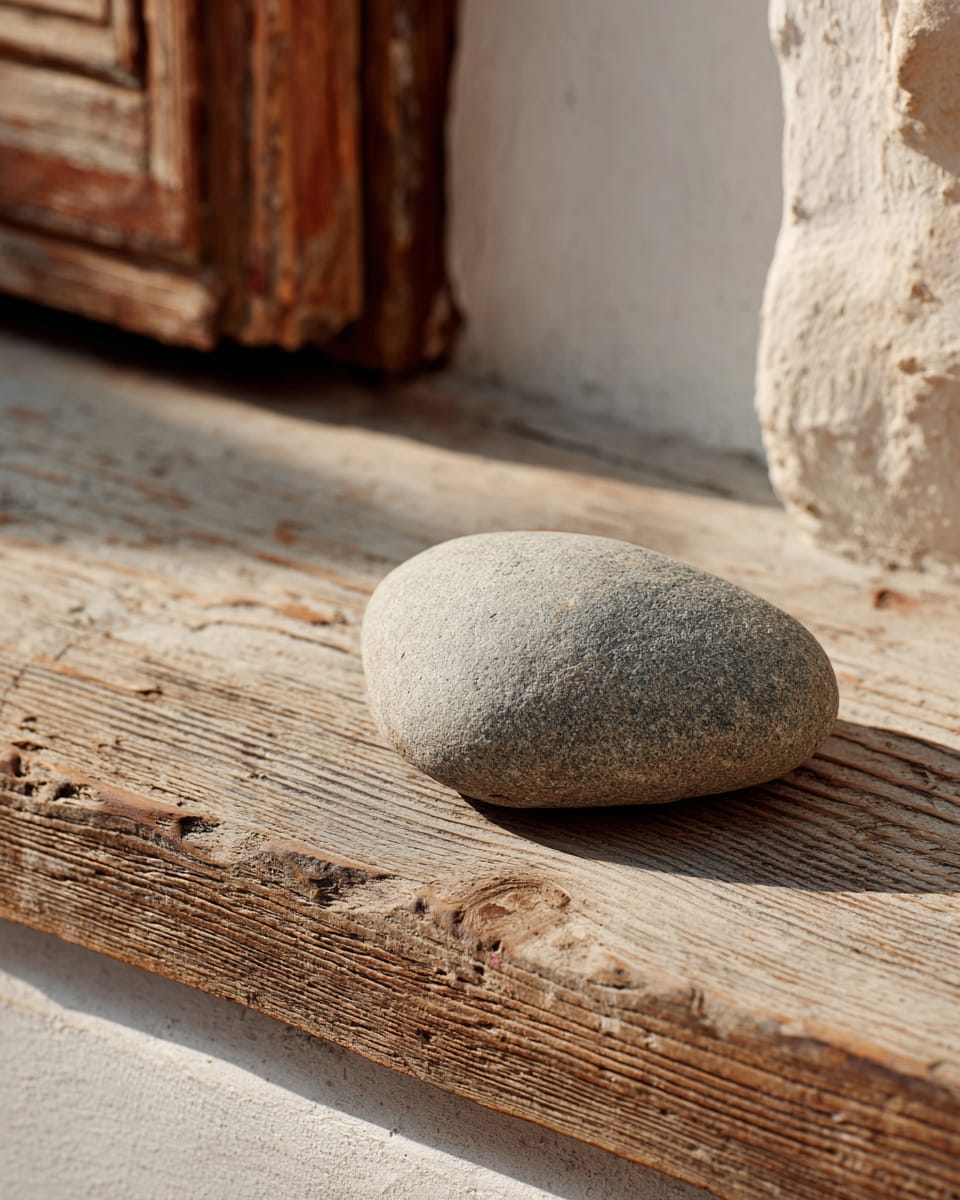
People come to watch the application. The maalem mixes the lime with iron oxide pigment for colour and trowels it on in three coats, each set for hours before the next. He then takes a small smooth river stone, galet in French, the polished flat kind one finds in mountain streams, and burnishes the surface in slow circles, hour after hour. He knows when to start the soap by the resistance under the stone, not by a clock. The colour deepens for two weeks as the lime continues to carbonate. A small bathroom takes a maalem and an apprentice three or four days. A larger commission can run for weeks.
Bill Willis made the leap from hammam to living room. An American designer who settled in Marrakech in the late 1960s, Willis restored riads for Yves Saint Laurent and Pierre Bergé, the Getty family, the Rolling Stones, and most of the foreign aesthetes who passed through Morocco in the decades that followed. He took tadelakt out of the steam rooms where it had always lived and put it on the walls of the rooms his clients sat in. The Western design world followed in the 1990s, first through the French, then everyone else. Willis died in 2009. The maalems he worked with kept going.
The technique nearly disappeared in the same period it became famous. By the 1980s, cement plaster had replaced lime in most Moroccan construction, including hammam restoration. A few maalems in Marrakech and Fez kept the practice. The houses Willis was restoring kept them busy. So did a quiet generation of Moroccan owners restoring older houses properly.
Today the price per square metre of properly executed tadelakt runs four to six times that of cement plaster. The price reflects time. A maalem who has been doing this for thirty years cannot move quickly. Rushed lime cracks within a winter. Rushed polishing leaves the surface chalky. The wrong soap leaves it rough. There is no shortcut version that ends up looking like the long version.
The polishing stones surprise most people who watch. The maalems do not buy them. They inherit them, palm to palm, from the man who taught them, and one day they give them on. The stones travel sideways through the medina, generation to generation, never sold. It is not a secret. It is just not advertised.
Tadelakt suits the wet rooms of a restored riad: bathrooms, kitchens, the surround of a hammam if the house has one. It also works on dry walls, where the surface produces a depth and irregularity industrial materials cannot reproduce. People often mistake the irregularity for damage when they first see a tadelakt wall. The small pillows where the stone passed at slightly different angles. The colour shifting between morning and afternoon with the light. These are not flaws. They are the surface's signature. Roman frescoes have a similar quality: lime plaster, applied wet, polished, mineral-pigmented. The Romans called their version opus signinum. It has survived two thousand years wherever the makers took their time.
For anyone restoring a riad, tadelakt is one of the line items where the difference between a good house and a mediocre one becomes visible. A bathroom finished in cheap stucco painted to look like tadelakt fails within the first year. It cracks, it streaks, it stops being waterproof. A bathroom finished by a maalem with proper lime, proper soap, and a stone he has had for thirty years will outlive everyone in the house.
This is why owners of restored riads in the medina talk about the walls. Not as decoration. As the part of the house most likely to still be there when nothing else is.